
Therapy for Burned Out and Ragey Women in NYC
Telehealth Therapy in NYC, Denver, CO, & ME

Therapy for Stress and Burn Out in Women in NYC

Go from crashing on the couch to present in your life
Your kids have called your name 10 times, but you’ve barely registered it. The stress of your workday is still hanging over your head and you’re scrolling on the couch trying to hold yourself together. You want to be able to engage in your life outside of work, but you feel stuck, practically glued to your spot.
You don’t have to lose your competitive edge to find peace in your nervous system. Let’s move you from barely surviving to deep, active presence.
Virtual Therapy For Parental Stress & Burnout In Denver, CO, NYC, & Maine
After a long day of full-time parenting, working from home, or working in an office, you are beyond capacity to make another decision. You snap at your partner, your kids, or your dog for simply appearing to need your time and attention. Then the guilt hits: Why can’t I be better?
At the same time, you feel like you need the adrenaline rush to motivate you to perform. The constant low buzz of anxiety keeps up your momentum at work and at home. The thrill of a win in court, a successful surgery, or feeling on your A-Game managing your high performing team.
You know you’re stressed, but you can’t seem to snap out of it. Work is demanding and the world feels heavy. You’re burning the candle from both ends and you know something needs to give, but you worry that feeling better might make you lose your edge at work.
I offer therapy for high achieving professionals and parents who have experienced chronic stress and burnout (let’s face it, who hasn’t?). I’ll help you reconnect to yourself and your loved ones without losing the edge that makes you a top-performer at work.
Let’s move from constant overwhelm and “checking out” to being present with therapy for stress and burnout in Manhattan, Denver, and Maine
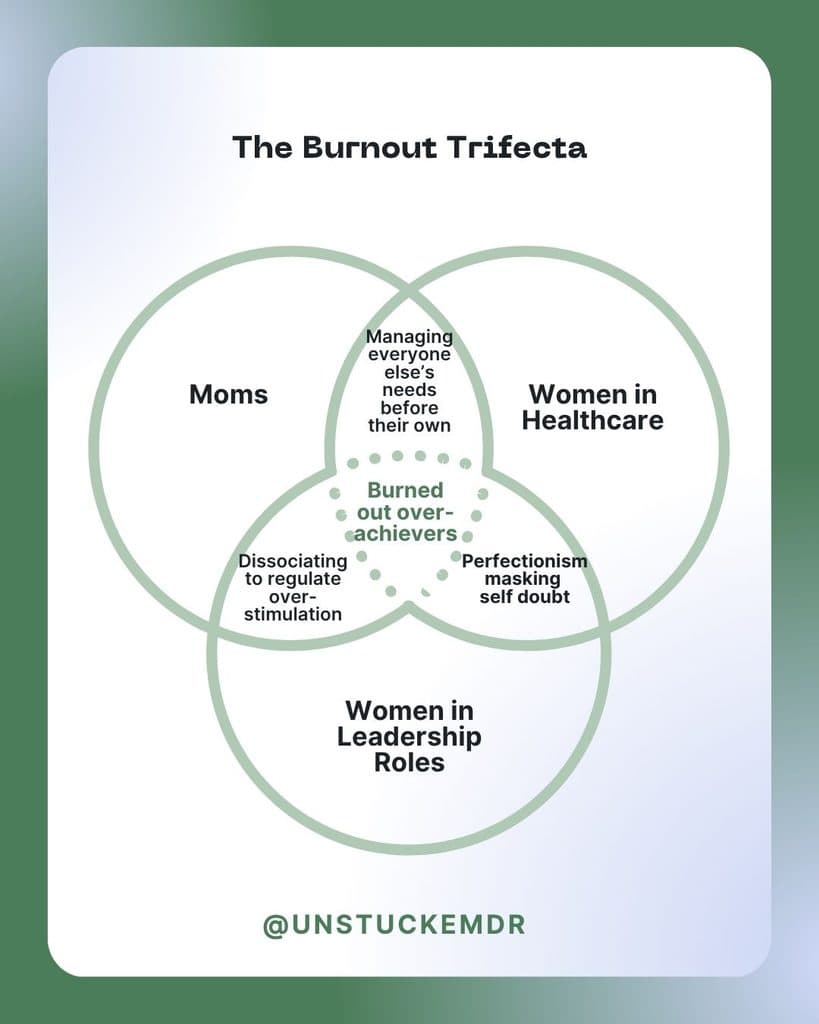
In my practice, I primarily work with women in the following roles that are contributing to their burnout:
- Moms
- Healthcare (physicians, nurses, social workers, and therapists)
- Professional leadership (tech, healthcare, business)
When treating burnout and chronic stress, we will explore the messages you’ve learned about yourself and the world around you and identify coping strategies.
Individual therapy is not going to change the reality of your lived experience, but we can explore the impacts of your experiences to chart a new path forward. It might look like changing the way you speak to or about yourself, identifying new coping skills, setting different boundaries, or identifying how to change your behavior or reactions when faced with something outside of your control. We may use recent-event EMDR protocols to bring down the temperature of what you’re dealing with to support your nervous system so that you can respond from your best self.
You’ll learn your patterns, but more importantly you will experience the shift: You’ll notice that you can feel well and still perform at work. In fact, you’ll notice more spaciousness. Space to breathe and think means that you find new creativity and better solutions. Instead of responding angrily to every annoyance, you feel connected and able to lead your team more effectively.
Skye offers therapy for stress and burnout in Denver, CO | Maine | NYC
Frequently Asked Questions About Therapy For Stress and Burnout
Everything you need to know before getting started.
I’m a woman in leadership and feel really angry all the time. Do I need therapy for anger or therapy for stress and burnout?
If you’re a woman experiencing anger and rage, you might not need therapy for anger management. You may be experiencing the final stages of burnout. Here are a few questions I would ask in your initial therapy session to assess: What is it like for you to feel angry? When did your rage start? If it’s more recent, I’d be curious about what’s happening at home and at work. Is your anger directed at specific people or do you feel it constantly and anything can make you “snap”? What does snapping mean for you (physical violence, verbal aggression, or self harm)?
Women often struggle with feeling angry. It feels intolerable and you either stuff it down or it consumes you until you “lash out.” I want to support you with allowing yourself to feel it and notice the sensations and thoughts just below your anger. From there, we can move therapy forward to find new ways of relating and, often, self compassion and self acceptance.
What are the signs of burnout in women?
You continue to function at a high level, but internally you know it has you in over-drive. You physically crash out, but your brain never turns off. When treating women, I keep in mind the systemic pressures that add to your stress. What is it like to be a professional in your field? Are you able to attend to your needs at home and at work? Are you expected to care for everyone else first? These are important things that can contribute to burnout, anxiety, and anger.
When assessing burnout, I use the Maslach Burnout Inventory to pay attention to the following symptoms:
1. Emotional exhaustion: Are you feeling stressed and exhausted?
2. Depersonalization: Are you feeling cynical or distanced from your work and the people around you?
3. Personal accomplishment: Do you still derive meaning and satisfaction from your work?
I’m having a hard time relaxing and feel anxious all the time. How can therapy help?
Most women find me for therapy for burnout when they are feeling anxious and having trouble settling in their bodies. They are struggling to balance the work at home with their professional lives and the demands of parenting. If this sounds like you, you may be experiencing chronic stress or burnout.
These are the phases of burnout:
1. Honeymoon phase: This is the phase where you’re excited about what you’re working on. So excited, in fact, that you take on more without realizing it. Without good boundaries and consideration of your capacity (people with ADHD are more at risk of this), you fall into a stress response.
2. Stress onset: At this point, there is no denying that you’re feeling stressed, but you feel like you can manage it. You feel more tired and notice you’re a little more irritable. Overall, the reward still outweighs the state you’re in and you can see a light at the end of the tunnel (so to speak) and completing projects reduces your stress level.
3. Chronic stress: You can’t remember the last time you didn’t feel stressed out. Your nervous system is always heightened (you’re jittery and sleep no longer feels restorative). When your nervous system is chronically taxed by stress, you may notice more stomach aches, headaches, and that you no longer have energy for the things you typically enjoy. You withdraw more, choosing to preserve your energy for work. At the same time, you feel more resentful towards your work and hopeless about your ability to change your work environment or that things will get better.
4. Burnout: When you hit burnout, your system is taxed. You’re not sleeping well, feel emotionally depleted, and may find that your “filter” is not working the way it used to. This is where women in particular find that they are “ragey” – you notice that the system is broken and it feels insurmountable. You become irritable with your partner and kids and withdrawn from your friendships. This is when I recommend seeking treatment to avoid chronic burnout.
How do I get started?
Contact Skye for therapy in Denver, CO to schedule a free, 15-minute phone consultation. This consultation call is a chance for you to share what you’re experiencing and for me to tell you about my approach. I want to be sure we both feel that I’m the right fit.
Where do you live and where do you see clients?
I currently live in Maine. I am a licensed clinical social worker (LCSW) in New York (where I’m from), Colorado (where I lived 2019 – 2016) and Maine (where I live now) and see clients virtually in all 3 states.